Recharge Your Soul with a Career Break
When I quit my job in 2013, my soul was pretty dried up. I had become a cog in the machine and needed something to remind me my heart was still beating.
Travel filled that void in the past when I’d take my two-week vacations, but I was looking for something more. I wanted to… brace yourself for the ultimate cliché… make a difference. Or maybe it was more selfish than that and I just wanted to smile at myself in the mirror again.
I’d been a Kiva lender for a few years and absolutely love the organization. In fact, it took me about 20 seconds to run back to my office and look for my first borrower after initially hearing about them from a co-worker. I later learned they also have a volunteer fellowship program. That changed everything.
Who is Kiva?
If you’re not familiar with Kiva, it’s a non-profit whose mission is to alleviate poverty through lending. You select a borrower from the website and lend as little as $25 (also known as a microloan). Over the course of a year, your money is paid back. While you don’t earn interest, you are empowering people to create a better life. Putting your faith in another person gives them a vote of confidence, an added incentive to succeed. This endorsement contributes to Kiva’s astonishing 99% loan repayment rate. Ask any bank what theirs is!
Learn more about how Kiva works.
What’s a Kiva fellow?
The Fellows Program started in 2007 as a way for volunteers to be Kiva’s “eyes and ears” on the ground. Because they are non-profit and their network of partners around the world continues to grow, they simply can’t visit each of them as often as they’d like. Instead, they send carefully selected fellows who are interested in using their skills in exchange for a unique learning opportunity. Each fellowship is different, but you’re essentially a liaison between Kiva and their global network. You may help train a new partner, perform borrower verifications in the field, scale-up new initiatives, or fill any number of needs.
My fellowship experience
In April 2013 I was poking around the Kiva website while planning my corporate escape. It was there I discovered the fellowship program and was instantly sold, so I applied. I didn’t have experience in international development, but I did teach English in Japan and traveled in developing countries. Over the next three months I had two Skype interviews and ultimately an offer to go to India. It felt like the process took forever, but once the wheels were in motion, it all happened very quickly.
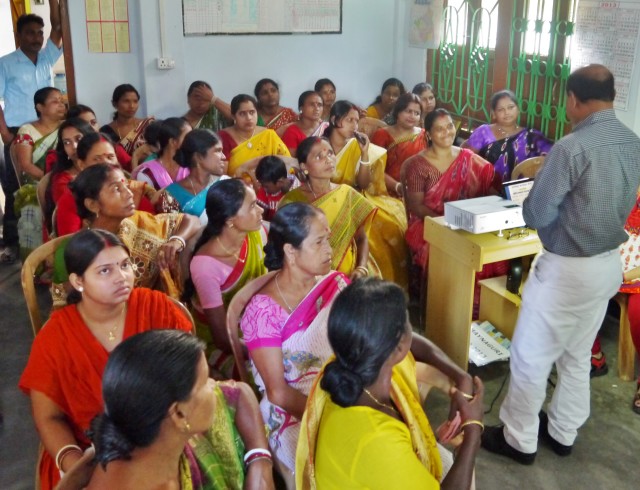
Instead of working five days a week for a paycheck, I worked six days a week for free. BJS was a brand new Kiva partner, so I trained them on Kiva processes and procedures and helped them write compelling borrower profiles for posting on the website. I had the opportunity to meet loan recipients in rural areas and attend presentations on financial literacy with them, which is one of the services BJS provides. Watching women huddled together in colorful saris, absorbed in learning about saving money in a bank and how insurance works, was transformative.
My brain could barely absorb everything I was experiencing while the empty part of me was quickly filling up. On my last day the staff of about 15 gathered for a good-bye party where they each went around the room sharing a special moment or something they learned from me.
I sobbed. And sobbed. Soul successfully recharged.
Post-fellowship I traveled around Asia and Latin America with a newfound focus on contributing locally. There are a number of social enterprises that support communities, from village artisans to at-risk youth. I have Kiva to thank for changing the way I travel and interact with locals. Now I work as a location-independent marketing consultant and freelance writer.
While my break wasn’t temporary, you don’t necessarily need to quit to have a life-changing travel experience.
Who is a fellowship good for?
-
People looking for a break from corporate life and can take a four-month sabbatical
-
Grad school students before or after their program
-
Career-changers
-
Job quitters (like me) or the unemployed
What are the requirements of a Kiva fellow?
Previous experience with international development or a background in finance will work in your favor, though not requirements. What they do want to see is time spent in developing countries, and ideally some international work experience. It’s not like a trip to Paris, so they want to be sure you’re comfortable in places where you can’t drink the water, living conditions may be sparse, and business etiquette is totally different. Naturally you need to be adaptable and willing to work outside your comfort zone. You’ll also need to show you’re able to fund your trip yourself or through fundraising. It is a volunteership, after all.
Kiva has recently expanded their program to include media fellows- those with a background in photography and/or videography to help build Kiva’s library of assets.
Read more about the requirements.
How much control do you have over your location, and what is housing like?
They ask for your preferences, but nothing is guaranteed. For each fellowship class, the Kiva team receives requests from the field, and those spots are filled based on the applicant pool. Language requirements can also narrow your options. You must speak Spanish for Latin America, and French for Francophone Africa, but there are a number of countries where English alone is sufficient. Of course additional languages are a bonus and may assist in placement, but not necessarily required.
You may have your own apartment, stay in a hotel or guesthouse, or have the opportunity to live with locals. The choice is yours based on what’s available.
How much does it cost?
The program itself has no fee, however you do need to cover your expenses for the entire fellowship. These include:
-
Travel to/from San Francisco and accommodations during training week (This is a requirement, regardless of where you live)
-
Flight to/from your assignment
-
Accommodations during your fellowship
-
Meals
-
Personal travel (weekend or holiday trips), shopping, and other expenses
Is there an “alumni” network?
Yes! There are private LinkedIn and Facebook groups, and alums will receive periodic email updates from the Kiva fellows team, including job opportunities throughout their network. Plus it’s not a bad addition to your resume!
How do you apply?
Visit the Kiva fellows page to apply. There are three classes per year, each lasting about four months, with approximately 25 fellows per class.
A Kiva fellowship is not a “voluntour” where you pay exorbitant fees for the privilege of working for free. Kiva invests a lot in training its fellows yet doesn’t charge for their program, so the application process is selective. If you’re looking for a fill-up in the soul department, have experience working, living, or traveling in developing countries and can commit to four months away, a Kiva fellowship might be for you.
Bio: Shelley Graner is a former Kiva fellow who likes to travel slowly and support local communities. She left the corporate world and now spends her days as a location-independent writer and marketing consultant. Read more about her travels and Kiva experience via her blog.






Leah on Mon, 6th Jun 2011 8:12 am
I really enjoyed reading your post. I am thirty-two soon and have itchy feet that are ready to try out foreign soils.
It is a fear of leaving the security of the day to day grind of paying the bills and living a safe and non-challenging way of life that has put me on hold for some time.
I hope (as it has I) your post will inspire others to go and follow their bliss – Leah 🙂
Patricia GW on Mon, 6th Jun 2011 8:54 am
Travel and experiencing a new culture really has put it into perspective, and filled that void with purpose (and joy).
In three weeks I’ll be moving to Paris myself for one month. I have the same feeling – the incredible surreal realization that I’m going to be living there…. it’s thrilling!!
Abby on Mon, 6th Jun 2011 2:11 pm
Oh, Jenny! Escargot isn’t palatable — it’s delicious! I love your writing style; it’s so fun and energetic. Can you believe how far we’ve come? Everyone, Jenny and I were in the exact same industry and have known each other online and via work emails for years and years. But we’ve only met once, many, many years ago. And one of those jobs she was sleeping next to her BlackBerry for was one I’d just left. And now she’s 33 and living abroad, just like I was last year. Kindred spirits. Jenny, you’re a true inspiration — I can’t wait to see how your adventure unfolds!
Debbie Beardsley on Mon, 6th Jun 2011 3:22 pm
Your life in Paris sounds ideal. It is nice to read about people who follow their dreams instead of wishing they had! Enjoy the rest of your journey.
Terriaw on Tue, 7th Jun 2011 1:40 pm
Wow, fabulous and well said! I love your new outlook on like. After experiencing career burnout and feeling a little lost and purposeless lately, you have encouraged me. I look forward to seeing Paris someday!
Jenny on Tue, 7th Jun 2011 6:50 pm
merci for all the sweet comments! @abby we are soooo kindred spirits! well except when it comes to our differing feelings on escargot…;) and congrats patricia on the move! thrilling indeed!
shawna on Thu, 9th Jun 2011 1:32 am
you’ve reawakened my travel bug. must. return. to. france. (someday.) eat a croissant for me!
Weekly Travel Blog Links — LandingStanding on Mon, 13th Jun 2011 6:16 am
[…] how badly I want to go to Paris… If only we could afford living there for an extended period of time during our travels! Any […]
G. Michael Schneider on Sun, 19th Jun 2011 3:36 pm
I am a firm believer in living and working overseas, just as you described. However, many of us actually like our jobs and our homes and are simply looking to renew and refresh our lives, not change it. However, you can have the same type of cultural experience without having to reach into your own wallet and without having to quit your day job–by taking what I call a “working vacation.” My wife and I have done this 15 separate times, from Australia to Zimbabwe, Turket to Tibet, Mauritius to Mongolia. I describe how to do it in my blog otherguysdime.wordpress.com and via Twitter at @otherguysdime. Learn how to have fun without having to have burn any of your bridges behind you.